
The Mystery of the Vanished Citations
James McConnell’s Forgotten 1960s Quest for Planarian Learning,
a Biochemical Engram, & Celebrity
by Mark Rilling
The Missing 1960s Decade
Memory transfer: McConnell’s Blind Alley
McConnell’s Struggle With Critics Over Invertebrate Learning
Controlling for Experimenter Bias
Controlling for Pseudoconditioning & Sensitization
McConnell’s Origin Myth for Planarian Learning
Escaping peer review as a celebrity-scientist
The Worm Runner’s Digest: Peer Review Versus the 1960s Counterculture
Attracting the Unabomber. While overselling behavior modification
The Assassination Attempt
Overpopularizing Behavior Modification
Conclusion: Some Historical Lessons for Today from the 1960s
References
Benjamin’s
 Jessica Benjamin is a psychoanalyst known for her contributions to psychoanalysis and social thought.
work on the history of psychology’s public image from the 1880s through the beginning of World War II
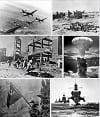
World War II or the Second World War, often abbreviated as WWII or WW2, was a global conflict that lasted from 1939 to 1945.
revealed that psychologists

promised more than they could deliver, a situation that fueled public distrust.
The APA has long encouraged coverage of its annual meeting by the media, but Benjamin’s work revealed that, historically, the coverage has often been sensational, a tradition McConnell continued.
McConnell’s work on retention following regeneration in planaria provides a case study in sensational journalism and illustrates how his media work escaped the normal mechanisms of peer review. When McConnell submitted an article (McConnell, Jacobson, & Kimble, 1959) on retention following regeneration to Harry Harlow, editor of the Journal of Comparative and Physiological Psychology, his cover letter contained the following statement:
At the close of the article we permitted ourselves the liberty of making some perhaps wild-sounding conjectures to explain our results. I hope that you will not find them too wild, nor out of place in your journal.
In his acceptance letter, Harlow gracefully insisted that McConnell delete the speculative material from the discussion so as to comply with journal policy (Harlow, letter, April 23, 1958). Thus, peer review restricted McConnell’s ability to speculate in the pages of the journals of the APA. The irrepressible McConnell sought other venues for speculation. The annual APA meeting in 1959 provided an opportunity.
How did McConnell catapult an arcane topic in comparative psychology, retention following regeneration in planaria, to an international news story? First, for the audience of psychologists, he (McConnell, Jacobson, & Maynard, 1959) speculated about a memory molecule; then, for the press, he speculated about a memory pill. When a planarian is cut in half, each half regenerates in about two weeks to form two regenerated planaria. After cutting a planarian in half, the head was conditioned. Repeating the surgery twice, on first- and then on secondgeneration animals, produced a third-generation planarian in which the nervous system was entirely regenerated compared with the organisms that experienced Pavlovian conditioning. When the third-generation animals regenerated from the tail showed savings, McConnell concluded that the engram was biochemical, not neural as Lashley had supposed. The headline for the story became How Tails Remember.
Just a few weeks after the APA meeting, Newsweek ran a prominent story indicating that McConnell had discovered that
memory and learning appear to have a chemical inherited basis.
McConnell never mentioned applications to humans in his talk, yet the readers of Newsweek were promised that
It may be that in the schools of the future students will facilitate the ability to retain information with chemical injections.
McConnell (1974b) later recalled the Newsweek story as a tongue in cheek article, a joke not shared with his readers.
The Science of Humor Is No Laughing Matter
by Alexandra Michel
Then the students completed a persistence task in which they played what amounted to an unwinnable game. The students were asked to guess the potential performance of employees based on provided profiles and were told that making 10 correct assessments in a row would lead to a win. However, the computer software was programmed such that it was nearly impossible to achieve 10 consecutive correct answers. Participants were allowed to quit the task at any time.
Students who watched the humorous Mr. Bean video clip ended up spending significantly more time working on the task, making twice as many predictions as the other two groups.
Cheng and Wang then replicated these results in a second study, during which they had participants complete long multiplication questions by hand. Again, participants who watched the humorous video spent significantly more time working on the task and completed more questions correctly than did those who did not watch the funny video.
Although humor has been found to help relieve stress and facilitate social relationships, the traditional view of task performance implies that individuals must concentrate all their effort on their endeavors and should avoid things such as humor that may distract them from the accomplishment of task goals, Cheng and Wang conclude. We suggest that humor is not only enjoyable but more importantly, energizing.
References
- Baumeister, R. F., Vohs, K. D., & Tice, D. M. (2007). The strength model of self-control. Current Directions in Psychological Science, 16, 351–355. doi:10.1111/j.1467-8721.2007.00534.x
- Bryant, G. A., Fessler, D. M. T., Fusaroli, R., Clint, E., Aarøe, L., Apicella, C. L., … Zhou, Y. (2016). Detecting affiliation in colaughter across 24 societies. Proceedings of the National Academy of Sciences, 113, 4682–4687. doi:10.1073/pnas.1524993113
- Cheng, D., & Wang, L. (2015). Examining the energizing effects of humor: The influence of humor on persistence behavior. Journal of Business and Psychology, 30, 759–772. doi:10.1007/s10869-014-9396-z
- Ko, S. J., Sadler, M. S., & Galinsky, A. D. (2014). The sound of power: Conveying and detecting hierarchical rank through voice. Psychological Science, 26, 3–14. doi:10.1177/0956797614553009
- McGraw, A. P., & Warren, C. (2010). Benign violations: Making immoral behavior funny. Psychological Science, 21, 1141–1149. doi:10.1177/0956797610376073
- McGraw, A. P., Warren, C., Williams, L. E., & Leonard, B. (2012). Too close for comfort, or too far to care? Finding humor in distant tragedies and close mishaps. Psychological Science, 23, 1215–1223. doi:10.1177/0956797612443831
- Oveis, C., Spectre, A., Smith, P. K., Liu, M. Y., & Keltner, D. (2016). Laughter conveys status. Journal of Experimental Social Psychology, 65, 109–115. doi:10.1016/j.jesp.2016.04.005
- Provine, R. R. (2004). Laughing, tickling, and the evolution of speech and self. Current Directions in Psychological Science, 13, 215–218. doi:10.1111/j.0963-7214.2004.00311.x
The Best Science Hoaxes, Spoofs, and Nerd Jokes
