
by James V. McConnell
Джеймс В. Макконнелл. Признания научного юмориста
Нетрадиционный учёный, изучающий причудливое исследовательское животное и редактирующий научный журнал с раздвоением личности, раскрывает всё: истеблишмент преследовал его, потому что он был виновен в оскорблении научного величия и, возможно, даже в дезистэблишментарианстве, все его грехи заключаются в одной скандальной фразе: чувство юмора! На самом деле все еще хуже: он виновен в том, что ввел студентов в заблуждение, заставив их думать, что наука может быть интересной. Ученый, исследовательское животное и журнал предстают в ярком свете развлечения в этом одном из самых приятных научных мемуаров, когда-либо написанных
Нетрадиционный учёный, изучающий причудливое исследовательское животное и редактирующий научный журнал с раздвоением личности, раскрывает всё: истеблишмент преследовал его, потому что он был виновен в оскорблении научного величия и, возможно, даже в дезистэблишментарианстве, все его грехи заключаются в одной скандальной фразе: чувство юмора! На самом деле все еще хуже: он виновен в том, что ввел студентов в заблуждение, заставив их думать, что наука может быть интересной. Ученый, исследовательское животное и журнал предстают в ярком свете развлечения в этом одном из самых приятных научных мемуаров, когда-либо написанных
УДК 001.4:82-7
Let me begin this confession with the statement, of my firmest conviction: Humour
 Humour or humor is the tendency of experiences to provoke laughter and provide amusement.
has no place at all in Science.
Science is a rigorous, systematic endeavor that builds and organizes knowledge in the form of testable explanations and predictions about the universe.
That is, in Science with a capital S. Any more than humour has a place in Religion
 Religion is a range of social-cultural systems, including designated behaviors and practices, morals, beliefs, worldviews, texts, sanctified places, prophecies, ethics, or organizations, that generally relate humanity to supernatural, transcendental, and spiritual elements — although there is no scholarly consensus over what precisely constitutes a religion.
with a capital R. If the Establishment had its way, there surely would be a special (and very hot) corner in hell set aside for priests and pastors who dared to crack jokes from the pulpit and scientists who made flip comments from the sanctuary of the laboratory.To the Establishment, some things are sacred, including Religion, Science and Cows. These are the grim realities of life and, believe me, there is nothing grimmer to me than Religion and Science (for some reason, Cows seem to be quite a different matter.)
Look at it this way. Humour is the great leveller, the great humanizer, the great destroyer of illogical pomposity. Religion and its monozygotic twin, Science, are by the Establishment’s definition super-natural in some sense. The barbed point of wit destroys the illusion, decapitalizes the nouns, and reduces Religion and Science to mere human occupations. The priest (whether in black frock or white lab. coat) loses his mystique the moment he dares to question what to the Establishment seems the: divine order of things by dropping a pungent pun into his sermon or lab. report. Defrock the fellow! Cut off bis research grants! Don’t let him publish his heresies in our journals!
And if there’s anything worse than someone who writes scientific or religious humour (they are about the same thing,) it’s the person who has the audacity to publish it. For ten years now, I’ve published a somewhat humorous, semi-scientific journal called Worm Runner’s Digest. Herewith begins my confession. For the Digest started as my own personal little joke on the Scientific Establishment but has turned out to be more of a joke on me. I’ve lost grants because of the Digest, had my laboratory experiments questioned not because of their content but because of the Digest, had articles I submitted to other journals turned down because I dared to cite studies published in the Digest. It would seem that a little humour goes a very long way — towards excommunication!
Far be it from me, a lowly psychologist, to attempt to define humour. All I know is that much of it seems a sudden or unexpected departure from the norm, and that if you don’t know what the norm is, the humour is usually lost on you. That is to, say, to see something as being funny, you have to have a little knowledge about whatever is, the subject of the joke. The more specialized the wit, the more information the reader must bring to it to appreciate it. The funniest satire ever written on Shakespeare’s
 William Shakespeare was an English playwright, poet and actor.
Hamlet
 The Tragedy of Hamlet, Prince of Denmark, often shortened to Hamlet, is a tragedy written by William Shakespeare sometime between 1599 and 1601.
would leave a reader cold who has not read the Bard1 or seen his plays massacred on stage. The fact that a famous, tavern on the American West Coast is named Chez When wouldn’t bring a smile to the lips of a person who didn’t both speak some French and know how a drunken American sounds when pouring a libation for a friend.
The same thing is true with the Digest. This scurrilous journal will seem humorous to you only if you happen to know a great deal about flatworms.
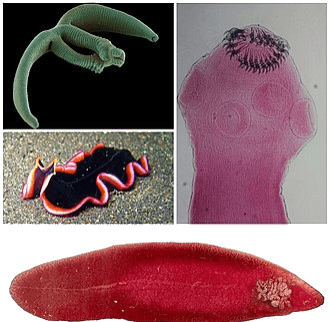 The flatworms are a phylum of relatively simple bilaterian, unsegmented, soft-bodied invertebrates.
On the off chance that some of the finer planarian points are lacking from your store-house of knowledge, I will duly explain a bit about the psychology of worms so that you will gain some insight into the psychology of worm runners. It’s a strange tail, I assure you. The planarian (fig. 1), or common flatworm, is a small aquatic animal that seldom grows to more than 3 centimetres in length and is found in ponds, streams and rivers throughout the world.
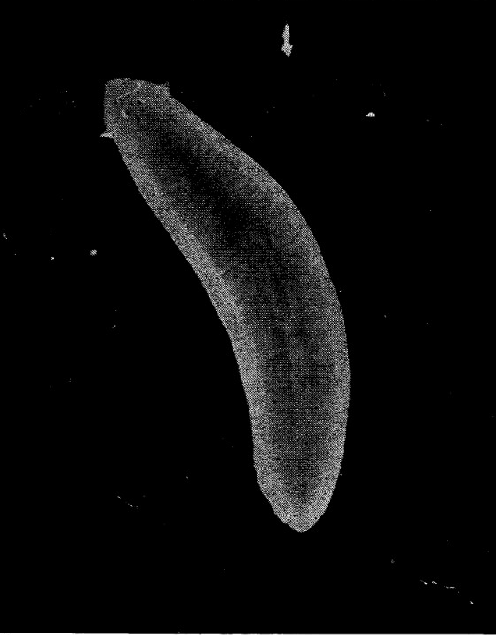
Fig. 1. The commons, remarkable flatworm.
I got interested in the beast because it’s the simplest animal on the phylogenetic tree that possesses a true brain and a human-type nervous system. But the planarian is famous for many reasons beyond its brain. For instance, it is the simplest form of life to have true bilateral symmetry — which means that you can cut it in half from head to tail and the left half will be a mirror image of the right. And it has about the most mixed-up sex life of any animal going.
Let’s face it: the planarian is that psychological anomaly, an anti-Freudian animal. To begin with, it is an hermaphrodite,
 A hermaphrodite is a sexually reproducing organism that produces both male and female gametes.
having a complete set of both male and female sex organs. So there goes, Freud’s
 Sigmund Freud was an Austrian neurologist and the founder of psychoanalysis, a clinical method for evaluating and treating pathologies seen as originating from conflicts in the psyche, through dialogue between patient and psychoanalyst, and the distinctive theory of mind and human agency derived from it.
concept of penis
 Priapulida, sometimes referred to as penis worms, is a phylum of unsegmented marine worms.
envy out the window, for the feminine side of the worm can’t really envy anything it lacks because, you see, it really doesn’t lack it. When a young planarian engages (as many of them do) in what Freud politely called exploratory play, does this mean that a single organism could, all by itself, violate the incest taboo? And when two adult flatworms mate, they back up to each other, their tails go up in the air, and they cross-fertilize, a primal scene that even the Kama Sutra
 The Kama Sutra is an ancient Indian Sanskrit text on sexuality, eroticism and emotional fulfillment in life.
doesn’t describe. But the most non-Freudian aspect of all concerns the planarian’s digestive habits.
1 Shakespeare is often called England’s national poet and the Bard of Avon (or simply the Bard) — wiki.
WORM RUNNER’S DIGEST
TABLE OF CONTENT
Volume 15 Issue 2
Published Dec 1, 1973
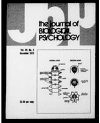
- James V. McConnell. Worms (and Things.)
- David P. Himle & Clayton Shorkey. The Systematic Descensitization of a Car Phobia & the Recall of a Related Memory.
- P. R. Mason. Size & Other Factors Determining Planarian Behaviour.
- Charles E. Robison. A Chemical Model of Long-Term Memory & Recall.
- Richard L. Seltzer. A Scavenger-Carrion Worm (4000,000,000 Years Old.)
- Tore Lydersen & Carl D. Cheney. Fixed-Ratio Discrimination Effect of Extinction & Satiation.
- Larry P. Gonzalez & William F. Maule. Transfer of Stress-InducedEffects — A Critique.
- Christopher C. Kessler. The Effect of Magnesium Pemoline on Learning in the Planarian. Book Reviews (Ed. by Jon D. Swartz.)
- Wayne J. Wilson. The Psychology of Humor, Jeffrey H. Golfstein & Paul E. McGhee (Eds.)
- Charles C. Cleland. Cognitive Processes of Nonhuman Primates, Leonard E. Jarrard (Ed.)
- Charles C. Cleland. Comparative Ecology & Behavior of Primates, Richard P. Michael & John H. Crook (Eds.)
- James W. Kalat. Principles of Sensory Psychology, Henry Tamar.
- Maureen L. McGavern. Sex & the Single Cell, Dolores Elaine Keller.
- Luis M. Laosa & Carol A. Falender. Childhood & Adolescence: A Psychology of the Growing Person, L. Joseph Stone & Joseph Church.
- Robert C. Reinehr. The Game of Science, Garvin McCain & Erwin Segal.
- Robert C. Reinehr. Cancer: The Misguided Cell, David M. Prescott.
- J. D. S. Community Psychology: Perspectives in Training & Research, Ira Iscoe & Charles D. Spielberger (Eds.,) Community Psychology & Community Mental Health: Introductory Readings, Patrick Cook (Ed.,) Issues in Community Psychology & Preventive Mental Health, Task Force on Community Mental Health, Gershen Rosenblum (Ed.,) Man as the Measure: The Crossroads, Daniel Adelson (Ed.,) Re Reviewers & Reviewed.
- Suzanne L. Gray. Forthcoming Reviews, Books Received
- J. D. S. Guide for Preparing a Book Review for JBP
- Jessie Shelby. An Annotated Bibliography of Research on Verterbrates (con’t.)
Volume 16 Issue 1
Published Jul 1, 1974
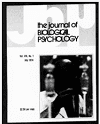
- James V. McConnell. Introduction: Confessions of a Scientific Humorist.
- F. E. Warburton. The Lab Coat as a Status Symbol.
- D. S. Greenberg. Reflections on Six Years of Progress.
- D. S. Greenberg. Questions & Answers with Grant Swinger.
- * * *1
- William C. Corning. Bringing It All Back Home.
- * * *1
- Ian Rose. The Professional Patient
- * * *1
- * * *1
- Julius S. Greenstein. Studies on a New, Peerless Contraceptive Agent.
- Ethelbert Lovett. In Search on the Gebentsher sperm.
- Mo Twente. The Exposure Phenomenon.
- Barry Tuscano. Lab Report.
- Roger Hayward. Bilvets-Research & Development.
- Peter R. Runkel. How to Teach a Cow a Damn Good Lesson.
- C. Peter Rosenbaum. Smorr Chen.
- Peter Suedfeld & Yakov M. Epstein. The Egghead & i.
- Frederic Wakeman. The Political Eptness of Flatworms.
- Tollan Dymas (J. A. Lindon.) Under Worm Wood.
- * * *1
- * * *1
- * * *1
- * * *1
- * * *1
- H. E. Marks. The Improper Use of the Vertical Runway; A Reply to Dr. Evans.
- Selby H. Evans. A Reply to Professor Marks’ Reply to Dr. Evans.
- H. E. Marks. A Reply to Dr. Evans’ Reply to Professor Marks’ Reply to Dr. Evans.
- Raymond J. Corsini. The Blind Men & the Elephant: Three Ends to One Tale.
- H. S. Wolff. The House Cricket as a Temperature Sensor.
- Allan Neil. Neil Illusions,
1  We didn’t find an opportunity to read the text under the advertisement for the book by James McConnell & Marlys Schutjer Science, Sex and Sacred Cows. — T.C.A. Editorial.

