by Larry Stern
Ларри Штерн. Оглядываясь назад: Журнал Дрессировщика Червей
Главная мысль статьи принадлежит Артуру Кёстлеру, утверждавшему, что главной радостью цивилизованного человека среднего возраста является чтение Журнала Дрессировщика Червей, сидя у камина с рюмкой коньяка.
on an extraordinary and subversive journal
Главная мысль статьи принадлежит Артуру Кёстлеру, утверждавшему, что главной радостью цивилизованного человека среднего возраста является чтение Журнала Дрессировщика Червей, сидя у камина с рюмкой коньяка.
UDC 001.95
Science, we all know, is serious stuff. If it is to retain its cultural and cognitive authority, it must be seen as an objective, dispassionate and value-free enterprise. But science, at its core, is a human enterprise populated by all types of people. Some, to be sure, are rather austere – practically agelastic. Newton,
 Sir Isaac Newton was an English polymath active as a mathematician, physicist, astronomer, alchemist, theologian, and author who was described in his time as a natural philosopher.
it’s been said, only laughed once: when asked if there would be any use in reading Euclid.
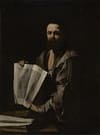 Euclid was an ancient Greek mathematician active as a geometer and logician.
But science and scientists can also be awfully funny – without jeopardising the objectivity of what comes to count (however provisionally) as certified knowledge.
Mindful of American author E.B. White’s
 Elwyn Brooks White was an American writer.
admonition that

Humor can be dissected as a frog can, but the thing dies in the process and the innards are discouraging to any but the pure scientific mind.
I shall not attempt to provide a definition, much less an analysis of the nature of humour, its role in one’s psychic well-being, relationships with others, and various institutional settings that comprise society. I note, only in passing, that some of the giants have tried their hand, and perusing their work literally left me limp. Unable to appreciate the merits of Hobbes
 Thomas Hobbes was an English philosopher.
superiority theory made me feel inadequate. Kant’s
 Immanuel Kant was a German philosopher and one of the central Enlightenment thinkers.
reliance on reason to account for humour seemed totally incongruous to me. After slogging through Kierkegaard’s
 Søren Kierkegaard was a Danish theologian, philosopher, poet, social critic, and religious author who is widely considered to be the first existentialist philosopher.
treatise I felt so disoriented and confused that I began to question the meaning of it all. Though hopeful, I found that delving into the recesses of Freud’s theory provided no relief at all. And reading Schopenhauer’s
 Arthur Schopenhauer was a German philosopher.
discussion sapped whatever will I previously possessed to continue. Fortunately – just in the nick of time as the deadline for this article approached – I stumbled upon Mel Brooks
 Melvin James Brooks is an American actor, comedian, filmmaker, songwriter, and playwright.
learned distinction,
Tragedy is when I cut my finger. Comedy is when you walk into an open sewer and die.
Feeling rejuvenated, I was able to press on.
Cartoonists have been poking fun at science – and especially at psychologists – for decades. From 1925 to 2004, for example, 2486 cartoons about psychology appeared in the New Yorker.
 The New Yorker is an American magazine featuring journalism, commentary, criticism, essays, fiction, satire, cartoons, and poetry.
Gary Larson’s
Gary Larson is an American cartoonist who created The Far Side, a single-panel cartoon series that was syndicated internationally to more than 1,900 newspapers for fifteen years.
depictions of psychology in his Far Side
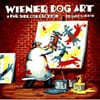 The Far Side is a single-panel comic created by Gary Larson and syndicated by Chronicle Features and then Universal Press Syndicate, which ran from December 31, 1979, to January 1, 1995.
are insightful – and hilarious. Just consider his cartoon titled, The Four Personality Types, featuring four individuals confronting a half-filled glass of water. After the typical optimist, pessimist, and indecisive personality types say their piece, the fourth, hands on hips bellows,
Hey, I ordered a cheeseburger!
You don’t need to be a native New Yorker to relate – and smile.
But one need not look outside the halls of academia to find such humour. Indeed, for my money, nothing beats the humour contained in the Worm Runner’s Digest, published between 1959 and 1979. If your library subscribed, you might find it and its twin, the Journal of Biological Psychology, nestled between the serious Journal of Applied Psychology
The Journal of Applied Psychology is a monthly, peer-reviewed academic journal published by the American Psychological Association.
and Journal of Comparative and Physiological Psychology.
Journal of Comparative and Physiological Psychology was a peer-reviewed academic journal published by the American Psychological Association.
The brainchild of James V. McConnell, then an assistant professor of psychology at the University of Michigan, the Worm Runner’s Digest burst on the scene as a new 1960s counterculture was beginning to take form. Devoted in part to puncturing the pretentiousness and pomposity of that sacred cow known as ‘science,’ it was, as McConnell noted, one of the first scientific journals that knowingly published satire.
What, then, prompted the creation of this peculiar journal?
Mitchell Donaldson Was Inspired By the Worm Runner’s Digest

The catalyst for this work was biologist James W. McConnell’s experiments on planarians, a type of flatworm. Planarians have the unique ability to regenerate multiple identical worms from smaller parts of a single worm. This phenomenon interested me as a metaphor for metaphysical problems associated with human individuation. In my paintings I explored the worm as if it were an enlarged line taking on many other forms. This morphing creates uncertainty about how individual objects are perceived and depicted. The paintings are based on drawing, in which a line usually separates the figure from the background. My experiment with line as a figure in its own right, be it a worm, intestine, limb, branch, root, river or vein, expands into a material exploration of line as an edge or limit, serving both a dividing and connecting function. The paintings accumulate different approaches to lines as objects of tension or ambivalence. It is important to note that the installation of paintings is a giant unfinished collage. Their composition constantly changes depending on the viewer’s point of view, heightening the awareness of the interdependence of the parts and the lack of resolution. The violation of traditional distinctions between figure and ground in paintings is accompanied by the involvement of the viewer in the installation.