
The Mystery of the Vanished Citations
James McConnell’s Forgotten 1960s Quest for Planarian Learning,
a Biochemical Engram, & Celebrity
by Mark Rilling
Марк Риллинг. Тайна исчезнувших цитат.
Нетрадиционный учёный, изучающий причудливое исследовательское животное и редактирующий научный журнал с раздвоением личности, раскрывает всё: истеблишмент преследовал его, потому что он был виновен в оскорблении научного величия и, возможно, даже в дезистэблишментарианстве, все его грехи заключаются в одной скандальной фразе: чувство юмора! На самом деле все еще хуже: он виновен в том, что ввел студентов в заблуждение, заставив их думать, что наука может быть интересной. Ученый, исследовательское животное и журнал предстают в ярком свете развлечения в этом одном из самых приятных научных мемуаров, когда-либо написанных
Нетрадиционный учёный, изучающий причудливое исследовательское животное и редактирующий научный журнал с раздвоением личности, раскрывает всё: истеблишмент преследовал его, потому что он был виновен в оскорблении научного величия и, возможно, даже в дезистэблишментарианстве, все его грехи заключаются в одной скандальной фразе: чувство юмора! На самом деле все еще хуже: он виновен в том, что ввел студентов в заблуждение, заставив их думать, что наука может быть интересной. Ученый, исследовательское животное и журнал предстают в ярком свете развлечения в этом одном из самых приятных научных мемуаров, когда-либо написанных
The Missing 1960s Decade
Memory transfer: McConnell’s Blind Alley
McConnell’s Struggle With Critics Over Invertebrate Learning
Controlling for Experimenter Bias
Controlling for Pseudoconditioning & Sensitization
McConnell’s Origin Myth for Planarian Learning
Escaping peer review as a celebrity-scientist
The Worm Runner’s Digest: Peer Review Versus the 1960s Counterculture
Attracting the Unabomber. While overselling behavior modification
The Assassination Attempt
Overpopularizing Behavior Modification
Conclusion: Some Historical Lessons for Today from the 1960s
References

Author’s note. I thank Charles Abramson, Bernard Agranoff, Jeff Bitterman, Jay Best, Francis Crinella, Arni Golub, Donald Dewshury, Thomas Nelson, William McKeachie, Robert Sommer, and especially Marlys Schutjer for interviews, correspondence, reprints, and suggestions.
I thank John Popplestone and Marion White McPherson for access to the McConnell letters and articles at the Archives for the History of American Psychology, University of Akron, OH. The letters cited in the
text are located in the McConnell file at the archives. An earlier version of this article was presented at the International Conference on Comparative Cognition, Melbourne, Florida, March 1995.
Correspondence concerning this article should be addressed to Mark Rilling, Department of Psychology, Michigan State University, East Lansing, MI 48824. Electronic mail may be sent via Internet to Mark.Rilling@ssc.MSU.edu.
УДК 159.9.072.59

A piece of scientific research, like a work of fiction or a set of laws is never the result of a single individual’s efforts. It is rather the end product of myriad thoughts and actions and discoveries that have gone before. What debts a researcher does not owe to his contemporar ies and his immediate mentors, he owes to his predecessors. In truth as Newton observed we all stand on the shoulders of giants of the past and present.
McConnell another researchers who worked during the 1960s on the biochemistry
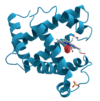 Biochemistry or biological chemistry is the study of chemical processes within and relating to living organisms.
of memory deserve a place in the pantheon for the founders of the modern search for the engram
An engram is a unit of cognitive information imprinted in a physical substance, theorized to be the means by which memories are stored as biophysical or biochemical changes in the brain or other biological tissue, in response to external stimuli.Biochemistry or biological chemistry is the study of chemical processes within and relating to living organisms.
because their work was a bridge that connected the older nonphysiological tradition of the comparative psychology of invertebrate
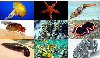 Invertebrates are a paraphyletic group of animals that neither possess nor develop a vertebral column, derived from the notochord.
animal learning with modern developments in biochemistry and molecular biology.
 Molecular biology is the study of chemical and physical structure of biological macromolecules.
The legacy of McConnell and the other planarian researchers is the establishment, with very well-controlled experiments, of classical conditioning in invertebrates.
The Search for the Engram Before McConnell and the 1960s
To appreciate McConnell’s successful struggle to establish learning in invertebrates and his contribution to neuroscience
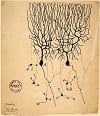 Neuroscience is the scientific study of the nervous system its functions and disorders.
in the area of the biochemistry of memory, it is necessary to consider the state of knowledge about invertebrate learning and the physiological basis of memory around 1950. Lashley
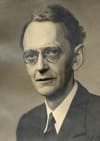 Karl Spencer Lashley was an American psychologist and behaviorist remembered for his contributions to the study of learning and memory.
is cited frequently by contemporary researchers in neuroscience who work on the cellular basis of learning and memory, but McConnell is largely forgotten. Lashley’s failure by 1950 to localize the engram or memory trace at a place in the nervous system (see Donegan & Thompson, 1991; Finger, 1994) led to speculation that the engram was biochemical (McConnell, 1967a).
Urged on by a suggestion in Hilgard’s
Ernest Ropiequet Jack Hilgard was an American psychologist and professor at Stanford University.
(1948) classic text on learning theory, researchers in animal learning and comparative psychology were searching for an invertebrate preparation as a launchpad for the physiological study of learning because invertebrate nervous systems have fewer neurons than vertebrate
 Vertebrates are animals with spinal cords and bony or cartilaginous backbones, including all mammals, birds, reptiles, amphibians and fish.
systems. Unfortunately, there was a major conceptual stumbling block. The conventional wisdom, especially among zoologists and others who were not experts in animal behavior, was that invertebrates were little robots without an internal state for memory, in which behavior was guided by instincts. Even Maier and Schneirla (1935), in the leading textbook of comparative psychology, described invertebrate learning as ephemeral when they wrote,
Experience may temporarily alter the form of behavior by inducing local tissue change.., but such changes are wiped out by subsequent events, and have no permanent altering effect
However, by citing a study on planarian learning from the 1920s, Maier and Schneirla left open the possibility that their generalization about invertebrate learning might not apply to planaria.
Richard Thompson, the senior author with James McConnell (Thompson & McConnell, 1955) on a nowclassic study on learning in planaria, studied with Lashley. Thorne (1995) designated the little-known and publicityshy Thompson as Lashley’s heir. Because Lashley failed to find the engram with rats, Thompson and McConnell were motivated to investigate learning and memory with an invertebrate preparation, so as to succeed where Lashley had failed.
WORM RUNNER’S DIGEST
TABLE OF CONTENT
- Joel Greenspoon. Sex-Role Psychology, Frank Wesley & Claire Wesley.
- Jeffery T. Wack. Handbook of the Biology of Aging, Caleb E. Finch & Leonard Hayflick (Eds.)
- Catheryne Serrurier. New Career Option for Women: A Counselor’s Sourcebook, Helen S. Farmer & Thomas E. Bacher; New Career Option for Women: A Selected Annotated Bibliography, Ann T. Phelps, Helen S. Farmer & Thomas E. Bacher; New Career Option: A Women’s Guide, Helen S. Farmer & Thomas E. Bacher
- Eric J. McF Swartz. City, Sing for Me: A Country Child Moves to the City, Jane Jacobson, Illustrated by Amy Rowen.
- Sally K. B. Swartz. It’s Scary Sometimes, Linda Sartor & Belinda Sifford.
- R. Colbert Rhodes. Ashley Montagu on Aggression; Learning Non-Aggression: The Experience of Non-Literate Societies, Ashley Montagu (Ed.)
Volume 21 Issue 1
Published Jul 1, 1979
- James V. McConnell. Worms & Things.
- Frances Kevill & John Kirkland. Infant Crying & Learned Helplessness.
- Evelyn Shim & Paul W. Dixon. The Effect of Cold Temperature Exposure on Avoidance Learning in Blatta orientalis.
- Rachelle H. B. Fishman. An Optokinetic Apparatus for Microscopic & Near-Microscopic Animals.
- Paul R. Kleinginna, Jr. & Julia Currie. Effects of Intermittent Reinforcement in the Florida Kingsnake (Lampropeltis getulus Floridana.)
- Richard W. Thompson & Louis G. Lippman. The Effect of Ethanol on the Duration of Tonic Immobility in Chickens.
- Dennis R. Brightwell. Reviewers Reviewed.
- Michael E. Albright & Edward C. Simmel. Behavioral Effects of the Cholinesterase Inhibitor & Insecticide Carbaryl (Sevin.)
- B. Brings & J. H. Bauer. Mothers & Others: Effects of Motivation on Maternal Retrievalin Hooded Rats.
- Carl C. Lindegren. The Theory of the Body Pattern.
- Dan C. Hillard. The Heart Patient Recovers: Social & Psychological Factors, Sidney H. Croog & Sol Levine.
- Jesse E. Purdy. Effect on Noise on Wildlife, John L. Fletcher & R. G. Busnel (Eds.)
- Meir Steiner. Biological Bases of Psychiatric Diseases, A. Frazer & A. Winokur (Eds.)
- Henry A. Cross. An Introduction to Hearing, David M. Green.
- Dennis R. Brightwell. Handbook of Psychopharmacology, Vol. 7; Principles of Behavioral Pharmacology, L. L, Iversen, S. D. Iversen, & S. H. Snyder (Eds.)
- Jeffery A. Winer. Frog Neurobiology: A Handbook, R. Linnás & W. Precht (Eds.)
- Charles C. Cleland. Beast & Man: The Roots of Human Nature, Mary Midgley.
- David D. Avery. Methods in Psychobiology, Vol. III, R. D. Myers (Ed.)
- T. Walter Herbert, Jr. Purpose in a World of Chance: A Biologist’s View, W. H. Thorpe.
- William V. Rago, Jr. Habituation: Perspectives from Child Development, Animal Behavior, & Neurophysiology, Thomas J. Tighe & Robert N. Leaton (Eds.)
- Jon D. Swartz. What Hath G. Stanley Hall Wrought? Six Recent Textbooks in Adolescent Psychology; Adolescent Development & the Life Tasks, Guy J. Manaster; Adolescents: Behavior & Development, Second Edition, Boyd R. McCandless; Adolescents; Development & Relationships, Second Edition, Mollie S. Smart, Russell C. Smart, & Laura S. Smart; An Introduction to the Psychology of Adolescence, Barbara M. Newman & Philip R. Newman; Childhood & Adolescence: The Psychology of the Growing Person, Fourth Edition, L. Joseph Stone & Joseph Church; Issues in Adolescent Psychology, Third Edition, Dorothy Rogers (Ed.)
- Jon D. Swartz. Re Reviewers & Reviewed.
- Dianne Bright Day. Fourtcoming Reviews; Books Available for Review; Journals Available for Review.
- Guide for Preparing a Book Review for the Journal of Biological Psychology.

