
The Mystery of the Vanished Citations
James McConnell’s Forgotten 1960s Quest for Planarian Learning,
a Biochemical Engram, & Celebrity
by Mark Rilling
The Missing 1960s Decade
Memory transfer: McConnell’s Blind Alley
McConnell’s Struggle With Critics Over Invertebrate Learning
Controlling for Experimenter Bias
Controlling for Pseudoconditioning & Sensitization
McConnell’s Origin Myth for Planarian Learning
Escaping peer review as a celebrity-scientist
The Worm Runner’s Digest: Peer Review Versus the 1960s Counterculture
Attracting the Unabomber. While overselling behavior modification
The Assassination Attempt
Overpopularizing Behavior Modification
Conclusion: Some Historical Lessons for Today from the 1960s
References
Attracting the Unabomber.
While Overselling Behavior Modification
The Assassination Attempt
On November 15, 1985, James McConnell became the victim of an assassination attempt by a serial bomber who is known to the media as the Unabomber because his earlier victims included professors and executives of airlines. At this writing, a man suspected of being the Unabomber has been arrested. Fortunately, McConnell was not killed, but his hearing was impaired by the sound of the blast (McConnell, 1987).
As far as I am able to determine, this sad episode marked the first time in the history of psychology that the murder of a psychologist was attempted, by an individual who did not know his victim, for the sole reason that the would-be assassin found the psychologist’s ideas offensive. McConnell was the intended victim of the bombing, but the Unabomber’s real target was applied psychology, specifically behavior modification. Unfortunately, the Unabomber selects his targets from those scientists who popularize technology with bold, simplified rhetoric that includes sweeping predictions about how technology will change society (Bomber Links an End, 1995). McConnell wrote two magazine articles about behavior modification, Psychoanalysis Must Go for Esquire
 Esquire is an American men’s magazine.
(McConnell, 1968) and Criminals Can Be Brainwashed Now for Psychology Today (McConnell, 1970), either of which could have caught the Unabomber’s eye. The Unabomber targeted McConnell because he popularized behavior modification (Serial Bomber, 1995.)
Overpopularizing Behavior Modification
After McConnell’s planarian research program collapsed, he turned to B. F. Skinner’s brand of behavior modification, but his contributions to the field were not distinguished. Much as Thomas Huxley
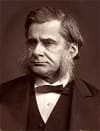 Thomas Henry Huxley PC FRS HonFRSE FLS was an English biologist and anthropologist who specialized in comparative anatomy.
was a bulldog for Darwin’s
 Charles Robert Darwin FRS FRGS FLS FZS JP was an English naturalist, geologist, and biologist, widely known for his contributions to evolutionary biology.
theory of evolution, James McConnell used his considerable rhetorical and public relations skills to popularize behavior modification. Just as John Watson
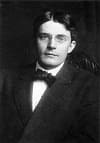 John Broadus Watson was an American psychologist who popularized the scientific theory of behaviorism, establishing it as a psychological school.
oversold behaviorism during the 1920s in the media (Todd, Dewsbury, Logue, & Dryden, 1994), James McConnell wrote articles for the popular press that oversold behaviorism during the 1960s.
McConnell (1967a), who wrote that

the entire history of scientific psychology may be viewed as a continuing search for better controls
failed to generalize this truism from planariann learning to behavior modification. McConnell naively believed that the application of a behavioristic conception of reward and punishment would solve the social problems of crime and mental illness. He failed to recognize that the evaluation of a behavioral modification program required control groups.
Esquire (Polsgrove, 1995) tried to be funny about the 1960s, so the magazine provided an ideal forum for McConnell. In 1968, when its 35th anniversary coincided with political assassinations, Esquire commissioned a set of articles around the theme Salvaging the Twentieth Century. McConnell was commissioned to write not only about what was wrong with psychology, but also about what was worth salvaging. McConnell’s piece was Psychoanalysis Must Go (McConnell, 1968), an article accompanied by a drawing in which Freud, his diploma, and his couch were caught in free fall against the background of a multistory, dingy, office building. After an unsupported, bald assertion that
psychoanalysis doesn’t really help the patient at all
Humor in Science Communication – How Much Is Too Much?
by Tyler Berrigan

Whether it be a funny viral video or the farcical antics of a friend, a good laugh starts a cascade of endorphin releases in the brain that make us feel cheerful, positive and fulfilled. Indeed, the ability to laugh is an aspect of our make-up as humans that seems to set us apart from animals. It is a universal experience that draws us closer together as a human race.
However, there is always that person who takes it a little too far. For example, in every circle of friends or relatives around the world, there’s always a ‘cemetery joke guy’. Without fail, upon driving past a cemetery, one of a selection of cheesy jokes will come out of their mouth.
Hey look! It’s the dead centre of town…
Hey that one’s nice… I bet people are dying to get in there…
I don’t want be buried there… heard it’s full of old stiffs…
All we can do is roll our eyes, lay our head in our hands and cringe so hard we squeeze out a noise that is more a forceful exhalation of breath than a chortle; and only implemented to acknowledge that the person did in fact speak and to prevent them repeating the verbal drudgery again.
The next level of awkwardness comes when they brazenly disregard their audience, fall back on one of their recycled delights, only to find that somebody has a relative in that same cemetery.
Too far…
The scenario above highlights the need for balance when it comes to using humor. One recent study, from the Journal of Science Communication, suggests that this is also the case with science communication.
Appropriately Season Your Science Communication with Humor
In many Asian countries, you’ll often have your socks blown off by how salty the food is. I know where I currently live, the perception is that something is not tasty, or even edible, if it’s not incredibly salty. However, for the average set of taste buds, it can be a little too full on, and after the first few mouthfuls, it’s too much to bear. Ironically, it’s at this point that it’s inedible.
Adding humor to science communication is much like seasoning food with salt. Of course, food needs salt. Likewise, if your science communication is completely void of humor, it lacks “flavor”; it’s dull and unpalatable. On the other hand, too much humor and it drowns out the flavor of everything else; and like the scenario above, it can be repulsive and hard to swallow. The right amount of humor, however, enhances the flavor of the message, making it not only easier to ingest, but pleasurable to do so.
About now, you may be justifiably put off by my cliché illustration. However, the piece of research that I cited earlier seems to indicate that this is very much the case with science communication— humor usage needs to be balanced. If this balance is not achieved, it can have serious consequences.
Misuse of Humor in Science Communication – Potential Consequences
When communicating research, one potential consequence of the misuse of humor is that it can cause one to misinterpret the seriousness of the message. For example, excessive use of humor may cause one to have a lackadaisical view of climate change, and potentially deter them from actually doing something about it. Therefore, it would be wise to assess the seriousness of your message and the science at hand. It may, at times, move you to leave out the jokes and puns, in favor of more insightful and persuasive comments.
Alternately, if there is not enough humor in the communication of your research, especially if your research covers subjects that aren’t as serious in nature, it can be as boring as watching a sloth play lawn bowls.

