
Worm-breeding with Tongue in Cheek or the Confessions of a scientist
hoist by his own petard
by James V. McConnell
Well, if the memory molecules were the same from one worm to another, why couldn’t we train one worm, extract the chemicals from it, inject them somehow into another, and thus transfer the memory from one beast to another?
For several months we tried to do just that, but we failed, simply because we were rather stupid about it all. Our hypodermic needles were far too large and we tried to inject far too much material. The poor little worms swelled up like balloons; a few popped. Eventually, though, a brainstorm hit us. Hungry planarians are cannibalistic. If we couldn’t make the transfer using our crude injection techniques, perhaps we could induce the worms to do the. work for us.
So, in our next experiment, we trained a group of victim worms and then chopped them in pieces and fed them to an unsuspecting group of hungry cannibals. After the cannibals had had a chance to digest their meal, we promptly gave them the same sort of training we had given the victims.
To our delight, the cannibals that had eaten educated victims did significantly better than did cannibals that had eaten untrained victims. We had achieved the first inter-animal transfer of information.
After we had repeated this experiment successfully several times, we went on to show that the chemical involved in the transfer was RNA, a giant molecule found in almost all living cells.
For we showed that we could achieve this type of memory transfer using a crude extract of RNA taken from the bodies of trained planarians and injected into untrained worms (using, I may say, a very, very small needle.)
In recent years, a considerable controversy has cropped up concerning a whole series of similar experiments using rats
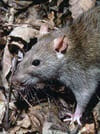 Rats are various medium-sized, long-tailed rodents.
and mice
 A mouse is a small rodent.
as subjects rather than worms. And, despite the outcries of the orthodox, it does now seem as if chemicals extracted from the brains of trained rats and injected into their untrained brethren does cause much the same sort of memory transfer as we had originally discovered in flatworms.
But I stray from the point. We published our original regeneration results in 1959 and at once found ourselves mentioned in several national publications. Of course, none of the journalists took our work at all seriously but, unfortunately for us, there were hundreds of high-school students around the country who did.
WORM RUNNER’S DIGEST
TABLE OF CONTENT
Volume 11 Issue 2
Published Dec 1, 1969
- Henry Altschuler, Morton H. Kleban, Martin Gold, M. Powell Lawton & Mark Miller. Neurochemical Changes in the Brains of Albino Rats as Related to Aversive Training.
- George M. Barnwell. Ne Distribution of the Land Planarian, Bipalium kewense.
- Alan Cohen. bifects of Whole Brain Homogenate on Transfer of Information in Rats.
- Stuart J. Coward. Regeneration in Planarians: Some Unresolved Problems and Questions.
- Stuart J. Coward. Planarian Regeneration (book review.) by H. V. Brønsted (ed.)
- E. J. Fjerdingstad. Memory Transfer in Goldfish.
- Arnold M. Golub. The Game of Science (book review,) by G. McCain & E.M. Segel & The Science Game, by N. McK. Agnew & S. W. Pyke.
- Carl C. Lindegren. The Uncertainty Principle in Biology.
- Jules H. Masserman. A Planarian Behaviorist’s View of Science and Human Behavior.
- James V. McConnell. orms (and Things.)
- Marlys Schutjer. The Annotated Bibliography of Research on Invertebrates, Part XV.
- Marlys Schutjer. A Bibliography of Research on the Biochemistry of Memory in Vertebrates.
- George Ungar. Molecular Neurobiology: Reflections on the First Ten Years of a New Science.
- Letters to the Editor.
- Donald Ary. Alice Over Sigma
- Robert A. Baker. ow to Shrink a Head.
- Harold Baldwin. The Negative Action.
- Robert Boice, David W. Witter and Janet A. Witter. Report on the First Annual Conference on Letisimulation in Herpets, Held at Terra Alta, West Virginia, Nov. 8-9, 1968.
- Joseph P. Coogan. Take Me Out to no Ball Game.
- William C. Corning. Bringing it all Back Home.
- Stuart J. Coward. Poemorph.
- Selby H. Evans. A Handbook of Common Laboratory Diseases.
- Dan Greenberg. Atlantic Community: G. Swinger. Takes Part in Discussions.
- Julius S. Greenstein. The Inside Story of the Battle for Humanity.
- Harry F. Harlow. Yearning & Learning.
- Roger Heyward. Cupidons — The Survival of the Flittest.
- William E. Kost. An Unfinished Account.
- Tuli Kuperferberg. 1n the Treatment of Cancer, Coronary Artery Disease, Lupus Erythematosus, Whiplash Fracture of the Cervix Uteri & Megalo’s Syndrome.
- J. A. Lindon. The Hunting of the Slype.
- Ethelbert Lovett. In Search of the Gebentsher Sperm.
- Margot Massey. Please Fill in the Blanks.
- John McClellan. Fort the Strong: A Saga.
- Howard L. Miller. The Brightness Function of an Imaginary Stimulus.
- L. F. Quattlebaum. Operant Control of Thanatos.
- M. W. Robin. PSYChOoceramics: A Layman’s Guide to Psychic Inner Peace Via the Harmonious Blending of Sturm and Drang, Yin & Yang, & Freud & Skinner by a Very Famous Person.
- W. Clem Small. A Note on Contemporary Trends in Learning Technology.
- Barry J. Wepman. Watt’s in a Name.

