
Looking Back:
The Worm Runner’s Digest
by Larry Stern
It began with a paper McConnell presented on the morning of 8 September 1959 at the 67th Annual Convention of the American Psychological Association. In this paper, Apparent retention of a conditioned response following total regeneration in the planarian, McConnell reported data collected by one of his honours students, Reeva Jacobson, which indicated that separate pieces of trained worms, after being allowed to regenerate their missing parts, retained the initial training of the original uncut worm. Moreover, after several regenerations, worms that contained none of the structure of the originally trained animal also retained some memory of the initial conditioning.
On 21 September Newsweek
 Newsweek is an American weekly news magazine.
published a summary of this work, triggering a series of events that no one – certainly not McConnell – ever expected.
Two years earlier, the Soviet Union’s
 Soviet Union was a transcontinental country that spanned much of Eurasia from 1922 to 1991.
successful launch of Sputnik
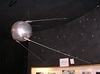 Sputnik 1 was the first artificial Earth satellite.
sparked fears that the United States lagged behind the Soviets in science and technology. One result, designed to ignite the youth of America’s interest in science, was a renewed emphasis on local science fairs.
Shortly after the Newsweek coverage, McConnell was inundated with letters from high school students from around the country asking where they could obtain worms for their projects and how they should go about caring for and training them. Some students, according to McConnell, demanded that he send a few hundred trained worms at once since their projects were due within days.
After answering the first few letters McConnell realised that something more efficient was needed. So he and his students wrote what amounted to a training manual describing their work and how to repeat their experiments.
McConnell firmly believed that anyone who takes himself, or his work, too seriously is in a perilous state of mental health. So as a joke, he affixed the name Worm Runner’s Digest to the top of the manual. Adorning the front page was a crest that one of his students designed, complete with a two-headed worm with pharynx fully exposed, a pair of diagonal stripes in the maize and blue colours of Michigan across the escutcheon of said planarian, a coronet made up of a Hebbian
Hebbian theory is a neuropsychological theory claiming that an increase in synaptic efficacy arises from a presynaptic cell’s repeated and persistent stimulation of a postsynaptic cell.
cell assembly, a symbol for psychology, a homage to the stimulus-response of behaviourism, and a motto, ignotum per ignotius which, loosely translated, means

When I get through explaining this to you, you will know even less than before I started.
To top things off, McConnell labeled it Volume I, No. 1.
To McConnell’s astonishment, word of this new journal got out and he started receiving submissions. So he decided to pep things up a bit by scattering poems, jokes, satires, cartoons, spoofs and short stories more or less randomly among the more serious articles.
McConnell wrote some of these spoofs himself, including one on learning theory that should be mandatory reading. In it, a psychology professor is walking in the woods thinking about how to teach his intro students the finer points of learning theory when he suddenly finds himself in a giant Skinner box
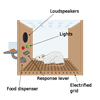 Skinner box is a laboratory apparatus used to study animal behavior.
on an alien spaceship, complete with a nipple on the wall that delivers a slightly cool and somewhat sweetish flow of liquid and, later, a lever that when pulled delivers protein balls of food. The experiments the subject endures are classic, and if the denouement does not bring a smile, well, perhaps you are in a perilous state of mental health.
Dozens of reputable psychologists contributed humour to the digest as well. Harry Harlow
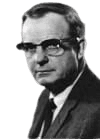 Harry Frederick Harlow was an American psychologist best known for his maternal-separation, dependency needs, and social isolation experiments on rhesus monkeys, which manifested the importance of caregiving and companionship to social and cognitive development.
had two pieces: Fundamental principles for preparing psychology journal articles and a poem, Yearning and Learning, a somewhat bawdy look at how monkeys learn to copulate.
B. F. Skinner
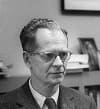
Burrhus Frederic Skinner was an American psychologist, behaviorist, author, inventor, and social philosopher.
contributed two parodies of behaviourism: A Christmas caramel, or a plum from the hasty pudding, in which he plays the role of
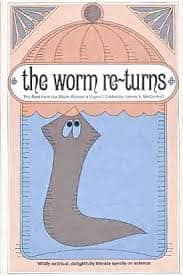
The Worm Re-turns: The Best from the Worm Runner’s Digest
Foreword by James McConnell
Все издания Джеймса Макконнелла

Пиршество демонов. Изд. 1, 1968

Американская фантастика, 1988

Пиршество демонов. Изд. 2, 1991
Такая разная фантастика-8, 1991
Антология рассказа, 1992

Апейрон, 1993

Fata Morgana, 1994
Американская фантастика в 2 томах, 1997
Срок авансом, 2004

Beyond Fantasy Fiction, 1953

Galaxy Science Fiction, 1953

If, 1956

If February 1957
If December, 1957
Best Science Fiction Stories and Novels-9, 1958

Great Science Fiction by Scientists, 1962
Great Science Fiction by Scientists, 1962
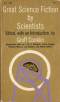
Great Science Fiction by Scientists, 1962
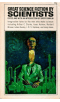
Great Science Fiction by Scientists, 1967
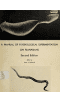
Manual of psychological experimentation on planarians, 1967

Readings in social psychology today. 1970

Science, Sex, and Sacred Cows, 1971

Introductory Psychology Through Science Fiction, Ed. 1, 1974
Understanding Human Behavior, 1974

Introductory Psychology Through Science Fiction, Ed. 2, 1977
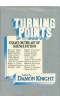
Turning Points Essays on the Art of Science Fiction, 1977
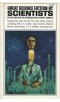
Great Science Fiction by Scientists, 1978

Starships, 1983
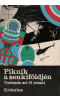
Piknik a Senkifoeldjen, 1984

Great Science Fiction Stories by the World’s Great Scientists, 1985

Uncollected Stars, 1986

Great Science Fiction Stories by the World’s Great Scientists, 1986
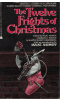
Twelve Frights of Christmas, 1986
Instruction’s manual to accompany: understanding human behavior, 1986

Sternenschiffe-2, 1987

Classic readings in psychology, 1989


Unheinilige Nacht, 1992
