
Confessions of a Scientific Humorist
by James V. McConnell
Thompson and I, knowing this odd habit of the flatworm, thought it might be clever if we trained a worm, then cut it in half, let the head grow a new tail and the tail grow a new head, and then tested both halves to see which half remembered the original training. Thompson and I never had the time to do that experiment at the University of Texas, but at Michigan I had students, worms and apparatus, so we set out to see what would happen.
To our great surprise, we found that the heads remembered (a month after original training) just as much as did worms that had been trained but not cut in half at all. Apparently, if you are a worm, losing your tail does not affect your memory. To our greater surprise, we found that the tails remembered even better than did the heads. Obviously, for worms, losing your head actually improves your memory!
These odd results suggested to us that, in the planarian at least, memories might not be stored just in the head section. Our next experiment consisted of chopping a trained animal in several pieces and letting all of them regenerate. As we half expected; each regenerate showed memory of what the original animal had been taught. Slowly it began to dawn on us that the usual theories of memory storage just didn’t hold, for these all; insisted that memories were stored neurophysiologically in the brain. Since our regenerated worms had to re-grow an entire new brain, it seemed to us that they must be storing their lessons chemically — that is, whenever the worm learned something, there had to be some corresponding change in the molecules in their bodies (just as there must be an electrical or mechanical change in a computer each time it stores a bit of data.) Our chemical theory of memory was interesting, but how to go about proving it?
People have personalities and, after you’ve studied them a while, it becomes apparent that planarians do, too. That is, each organism reacts slightly differently from its cousins and brothers. But chemical molecules are all supposed to be the same. So, when one worm learns his lesson in our training apparatus, we assumed that the chemical changes inside his body were more or less the same as those that would take place in any other worm’s body when it, learned the same lesson; Now, that’s a perfectly tenable hypothesis if you don’t happen to know much about zoology or biochemistry so, blessed with a most enthusiastic ignorance of such arcane topics, we ploughed ahead.
Here was our reasoning. Worms are rather special. Not only can you cut them in half, and each piece will regenerate into an intact organism, but you can also play all sorts of sadistic games with them. If you slice the head in half, from the tip of the snout down to where, the worm’s Adam’s apple
 The Adam’s apple or laryngeal prominence is the protrusion in the human neck formed by the angle of the thyroid cartilage surrounding the larynx, typically visible in men, less frequently in women.
would be (if it had one, which it doesn’t,) and then you keep the two sections of the head separated for twenty-four hours, each section will regenerate separately. You’ll end up with a two-headed worm (fig. 2.) Interestingly enough, a chap at Washington University in St. Louis
 Washington University in St. Louis is a private research university with its main campus in St. Louis County, and Clayton, Missouri.
worked with two-headed planarians later on and found, to our delight, that these animals, learn significantly faster than, do normal beasts. So, as far as the worm is concerned, two heads are indeed better than one! And if two heads aren’t enough for you, split each of them again, and you’ll have four heads on the same body. You can get up to twelve heads at once, if you and the worm are interested in such things (fig. 3.) More than that, you can take the head from one animal: and graft it on to another—planarians don’t reject tissue grafts the way that most higher organisms do. Well, if the memory molecules were the same from one worm to another, why couldn’t we train one worm, extract the chemicals from it, inject them somehow into another, and thus transfer the memory from one beast to another?
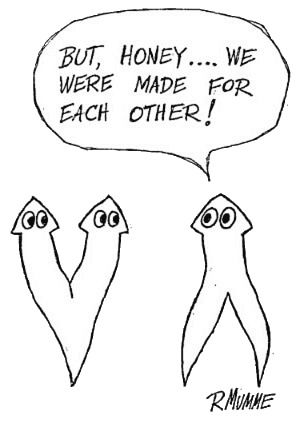
Fig. 2. Flatworms can be split at head or tail and will then regenerate two heads or tails
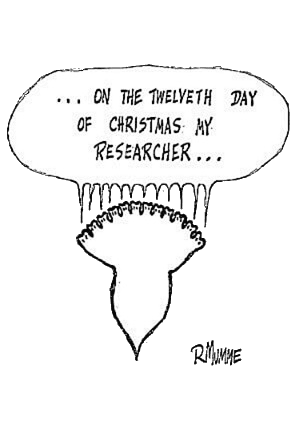
Fig. 3. Flatworm as a many-headed thing
WORM RUNNER’S DIGEST
TABLE OF CONTENT
Volume 17 Issue 2
Published Dec 1, 1975
- James V. McConnell. Worms & Things.
- Marcia P. Micklin & James G. May. An Apparent Frustration Effect in Planarians.
- Peter O. Peretti & Thomas Zrout. Conditioning in the Spinal Turtle, Emydoidea blandingi.
- Douglas P. Sackett, Michael Oswald & J. Erwin. Aggression Among Captive Female Pigtail Monkeys in All-Female & Harem Groups.
- Eugene K. Krebs. Factors in Conditioning & Orientation of Planarians: Learning in a Polar Field.
- Armando Simon. Chemoreception in the Siamese Fighting Fish, Betta splendens: II.
- Robert C. Reinehr. Insanity Defence, Richard Arens.
- William C. Corning. Cluster Analysis, E. J. Bijnen.
- Robert N. Rothstein. Modification of Child & Adolescent Behavior, Garth J. Blackham & Adolf Silberman.
- J. Michael Sproule & Betty A. Sproule. Informal Speech: Alphabetic & Phonetic Texts with Statistical Analyses and Tables, Edward C. Carterette & Margaret Hubbard Jones.
- James N. Olson. Visual Information Processing, William G. Chase (Ed.)
- Charles C. Cleland. Aberrant Development in Infancy: Human & Animal Studies. Norman R. Ellis (Ed.)
- Dennis R. Brightwell. Psychology on Convulsive Therapy, Max Fink, Srymour Kety, James McGaugh, & Thomas A. Williams (Eds.)
- Robert N. Rothstein. From Pigeons to People: A Look at Behavior Shaping, Elizabeth Hall.
- Harry H. Avis. Behavioral Pharmacology, S. D. Iversen & L. Iversen.
- Dianne S. Peters. Why & How We Laugh, Samuel Kahn.
- Leonard Green. The Psychology of Animal Learning, N. J. Makintosh.
- Spencer K. Thompson. Intellectual Functioning in the Aged, R. D. Savage, P. G. Britton, N. Bolton, & E. H. Hall.
- Wayne J. Wilson. Social Hierarchy & Dominance, Martin W. Schein (Ed.)
- David Fulkerson. The Development of Hypothetico-Deductive Thinking in Children, Kurt Bergling.
- Margaret M. McDonald. Growth & Change of Schizophrenic Children: A Longitudinal Study, William Goldfarb.
- Maureen McGavern. Man & Birds, Andrew J. Meyerriecks.
- H. W. Hise. The Machine That Oils Itself: A Critical Look at the Mental Health Establishment, Robert C. Reinehr.
- Kenneth W. Shuepbach. Helplessness: On Depression, Development & Death, Martin E. P. Seligman.
- Maureen McGavern. Early Learning in Man & Animal, Wladyslaw Sluckin Sluckin.
- Madeline D. Norwood. A Primer of Psychobiology: Brain & Behavior, Timothy J. Teyler.
- J. D. S. Mexican Americans, Ellwyn R. Stoddard; Psychological Differentiation, H. A. Witkin, R. B. Dyk, H. F. Faterson, D. R. Goodenough, & S. A. Karp.; Reference Encyclopedia of American Psychology & Psychiatry, Barry T. Klein (Ed.); Sociobehavioral Studies in Mental Retardation (Paper in Honor of Harvey F. Dingman), Richard K. Eyman, C. Edward Meyers, & George Tarjan (Eds.); Re Reviewers andReviewed.
- Kathye R. Wallace. Forthcoming Reviews, Forthcoming Student Reviews, Books Available for Review, Journals Available for Review.
Volume 18 Issue 1
Published Jul 1, 1976
- James V. McConnell. Worms & Things.
- Jack Demarest. Early Versus Later Test Trials in the Transfer of Acquired Information by Brain Extract.
- Goetz F. Domagk, Gerd Laufenberg, & Helga Kuebler. Chemical Transfer of Acquired Information in Mice.
- Goetz F. Domagk, Witiko R. Alexander, & Klaus H. Heermann. Transfer of Learned Tactile Discrimination in Octopus vulgaris by Means of Brain Extracts: Negative Results.
- Elliot E. Entin. Some Strategies for Textbook Rating.
- H. E. Marks & Wade Chittam. Body Weight & Body Composition Changes in Male & Female Hamsters Following Gonadectomy.
- Michael F. Whiddon, Sr., Michael O’Boyle, & James D. Lowe, Jr. Memory Transfer of an Escape Response by Means of Brain Tissue Homogenate Injection.
- Paul R. Sanberg & Lee D. Glass. The Invisible Leash: A Practical Application of the Self-Stimulation Phenomenon.
- Jane R. Waddy & Robert J. Kirkby. Lateral Preferences in a Psychiatric Population.
- Jerome Peters. The Neurologist’s Use of Rating Scales, EEG, & Tranquilizers in Dealing with Hysterical Symptoms.
- Carl Lindegren. Psychological Aspects on Scientific Collaboration: A Famous Case History.
- Thomas L. Dynneson. The Social Animal, Elliot Aronson.
- R. C. Rhodes. The Urban Scene: Myths & Realities, Joe R. Feagin.
- James N. Olson. Understanding Language, Dominic W. Massaro.
- Robert N. Rothstein. Toward A Self-Managed Life Style, Robert L. Williams & James D. Long.

