
by James V. McConnell
Джеймс В. Макконнелл. Черви. Условия разведения: Развесистая липа, или За что боролись, на то и напоролись
Вот уже 16 лет я издаю нечто вроде юмористического псевдонаучного журнала под названием Журнал Дрессировщика Червей. Отсюда и начинаются мои признания. Дело в том, что Журнал Дрессировщика Червей начинавшийся в виде личной небольшой шутки над Научным Учреждением, в итоге оно сыграло шутку надо мной
Вот уже 16 лет я издаю нечто вроде юмористического псевдонаучного журнала под названием Журнал Дрессировщика Червей. Отсюда и начинаются мои признания. Дело в том, что Журнал Дрессировщика Червей начинавшийся в виде личной небольшой шутки над Научным Учреждением, в итоге оно сыграло шутку надо мной
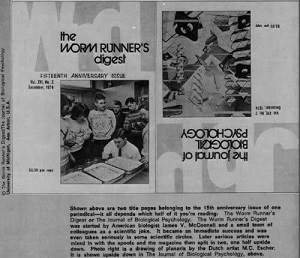
For sixteen years now, I’ve published a somewhat humorous semi-scientific journal called Worm Runner’s Digest. Herewith begins my confession. For the Digest started as my own personal little joke on the Scientific Establishment but has turned out to be more of a joke on me.
I’ve lost grants because of the Digest, had my laboratory experiments questioned not because of their content but because of the Digest, had articles I submitted to other journals turned down because I dared to cite studies published in the Digest. It would seem that a little humour goes a very long way towards excommunication! This scurrilous journal will seem humorous to you only if you happen to know a great deal about flatworms. On the off chance that some of the finer planarian points are lacking from your store-house of knowledge, I will duly explain a bit about the psychology of worms so that you will gain some insight into the psychology of worm runners. It’s a strange tail, I assure you.
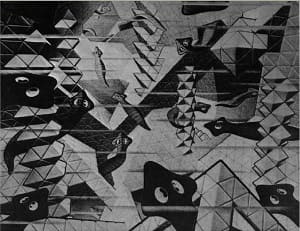
The planarian, or common flatworm, is a small aquatic animal that seldom grows to more than three centimetres in length and is found in ponds, streams and rivers throughout the world, I got interested in the beast because it’s the simplest animal on the phylogenetic tree
 Phylogenetic tree (also phylogeny or evolutionary tree) is a branching diagram or a tree showing the evolutionary relationships among various biological species or other entities based upon similarities and differences in their physical or genetic characteristics.
that has a true brain
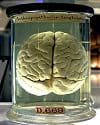 A brain is an organ that serves as the center of the nervous system in all vertebrate and most invertebrate animals.
and a human-type nervous system.
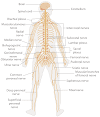 A brain is an organ that serves as the center of the nervous system in all vertebrate and most invertebrate animals.
But the planarian is famous for many reasons beyond its brain. For instance, it is the simplest form of life to have true bilateral symmetry
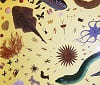 Organisms with bilateral symmetry contain a single plane of symmetry, the sagittal plane, which divides the organism into two roughly mirror image left and right halves – approximate reflectional symmetry.
which means that you can cut it in half from head to tail and the left half will be a mirror image of the right. And it has about the most mixed-up sex life of any animal going.
Let’s face it: the planarian is that psychological anomaly, an anti-Freudian animal. To begin with, it is an hermaphrodite, having a complete set of both male and female sex organs.
The flatworm lacks a mouth;
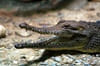 The mouth is the body orifice through which many animals ingest food and vocalize.
instead, it has a pharynx in the middle of its body that it extrudes when it comes in contact with food. The pharynx latches on to whatever is to be the meal and the worm sucks the juices up through it as through a drinking straw.
As a graduate student at the University of Texas, I had undertaken a project with another student, Robert Thompson, to see if the planarian could be trained.
Presumably, since it is the simplest animal to possess a true brain, it should be the simplest animal capable of showing true learning.
So Thompson and I set up an experiment in which we demonstrated at least to our own satisfaction that the flatworm could be taught the type of lesson that Professor Pavlov called the conditioned response.
Later, when I went to the University of Michigan at Ann Arbor as a struggling young instructor, the head of the Psychology Department called me into his office for a friendly little chat.

Jim, he told me, you may have heard a nasty rumour that to survive in the academic world, you must publish or perish. I just want you to know that the rumour is true. I’m sure you know what is expected of you, but I have a favour to ask. If at all possible, will you please try to do good research. But if you can’t, for God’s sake, publish a lot of bad research, for the Dean won’t know the difference anyhow.
I got the message and right away set up the first worm lab. at the University of Michigan.
I was given a tiny little basement room and enough funds to purchase a very modest amount of equipment and a few worms. Like all eager young instructors, I was wise enough to talk two very bright young students into doing all the actual work for me.
But I had a problem; we had demonstrated that worms could learn, so what were we to do next? For a long time 1 puzzled over this problem, then recalled that one day when Thompson and I were working at the University of Texas, we had had a wild idea.
Planarians not only reproduce sexually, but asexually as well. When a worm is first hatched from its egg, it is fully equipped to do everything but reproduce. After a few months of fattening up, it reaches puberty and begins mating. Sexual activity continues for three to four years, after which the animal seems to go into a senile decline, becomes all lumpy and misshapen and then a miracle often occurs. One day as the animal is crawling along the bottom of some pond, the tail develops a will of its own and grabs hold of a rock and refuses to be budged. The head struggles to get things going again, but no matter how hard the head pulls, the tail remains obstinately clinging to the rock.
WORM RUNNER’S DIGEST
TABLE OF CONTENT
Volume 8 Issue 2
Published Nov 1, 1966
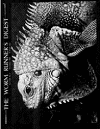
- James V. McConnell. Worms (and Things.)
- Stanislav Reiniŝ. Influence of Brain Homogenate Injection on the Speed of the Formation of Alimentary Conditioned Reflex in Rats.
- Mark C. Schwartz and Stuart Sweet. An Investigation of the Relation Between RNA and Learning in Planarians.
- Alfred Fuchs, Robert Harrington, Robert Lariviere & Timothy Robinson. Degree of Learning & Degree of Memory Transfer in Planarians.
- Reeva J. Kimble & Daniel P, Kimble. Failure to Find Transfervof Training Effects via RNA from Trained Rats Injectedinto Naive Rats.
- Stuart J.Coward. A Technique for the Proper Fixation of Planarians.
- Eric Holmes & Miriam Yost. Behavior Studies in the Sensitive Plant.
- G. M. Barnwell. The Role of Encephalization in the Feeding Behavior of a Land Planarian, Bipalium Kewense.
- Carl C. Lindegren. Scientific Freedom & Open Communication.
- Compiled by Ursula Mosler. The Annotated Bibliography of Research on Planarians: Part IX.
- James V. McConnell. (Worms) and Things.
- J. A. Lindon. My dear, you gave me a turn… Quite literally, I assure you!
- Ian Rose. The Adventures & Times of Eosilred, Prince of Elfour: A Bloodtime Story.
- Peter Wollheim. Do-It-Yourself Organic Chemistry.
- Alfred L. Brophy & Richard A. Durfee. A New Technique for the Treatment of Mental Disorders.
- Selby H. Evans. Support Drive in the Blueberry Pancake.
- Robert L. Dean. B. Willder’s Export Department.
- T. D. C. Kuch. Metrodorus of Chios.>/li>
- Daniel Kimble. The End of the Line.
- Julius S. Greendtein. Studies on a New, Peerless Contraceptive Agent: A Preliminary Final Report.
- John McClellan. The Feud of the Bats & Mice.
- Roy I. Mumme. Some Effects of Existential Confrontation on Status Ambiguity, Role Identification, & Affective Symbolization in Triclads.
Volume 9 Issue 1
Published Jun 1, 1967
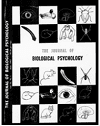
- James V. McConnell. Worms (and Things.)
- A. N. Cherkashin & I. M. Sheimann. Conditioning in Planarians & RNA Content.
- Georges Ungar. Transfer of Learned Behavior by Brain Extracts.
- Carl Lindegren. Scientific Freedom & Open Communication
- S. J. Coward, R. C. Taylor & R. E. Johannes. A Simple Flow System for Studying Chemoreception in Aquatic Organisms.
- Selby H. Evans. Failure to Replicate: Statistical Considerations.
- Allan L. Jacobson. Reply to a Russian Scientist
- James V. McConnell. Factors Affecting the Transfer of Training Effect in Rats.
- Compiled by Nancy Slater. The Annotated Bibliography of Research on Planarians: Part X.
Volume 9 Issue 2
Published Dec 1, 1967
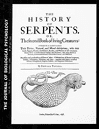
- James V. McConnell. Worms and Things.
- Gary Davis. Intercellular Transfer of Information by RNA Extracts.
- Samuel H. Revusky. Attempt to Transfer Aversion to Saccharin Solution by Injection of RNA from Trained in Naive Rats.
- Georges Chapouthier. Conditioning in the European Planarian, Dendrocoelum lacteum: The Effects of Prolonged Conditioning.
- James A. Dyal & Arnold M. Golub. An Attempt of Obtain Shifts in Brightness Preference as a Function of Injection of Brain Homogenate.
- F. T. Crawford, F. J. King & M. A. Magos. Amino Acid Analysis of Intact Planarians by Paper Chromatography
- W. C. Corning. Invertebrate Neurobiology: Conference Report.
- Norman E. Nelson. Slime Trail Recognition in Planarias.
- Compiled by: Allan L. Jacobson. A Bibliography on Chemical Transfer of Training.
- Compiled by: Judy Tunkl. The Annotated Bibliography of Research on Planarians: Part XI.
- J. A. Lindon. Not on the Menu
- Peter Lennon. Prince of Petomane.
- Ian Rose. Fellowshipmanship & Counterfellowshipmanship.
- John McClellan. Mr. Schoenfahrt: A Profile.
- Carol LaGue. A Tale of Two Planarians.
- Leo Shatin. Arat’s Commentary.
- James D. Weinrich. Divine Science.
- Gershom Clark Morningstar. First Thoughts on a New Theory of Human Behavior Living Puts.
- Briane Blaine. Ain’t Nobody in Here but us Chickens, Boss.
- The late Professor Gordian Knott. Le Cri Du Coeur.
- William Braud. The Case of Victor Styles.
- Selby H. Evans. The Institute of Exopsychology Solves a Problem in Form Perception
- Irving A. Kraft. To the Id: Onward & Sideways.
- Harold Baldwin. Building Better Blivets.
- F. Barry Milligan. Graph-etti.
- Letters to the Editor.
- Various. Poems.

