
by James V. McConnell
Джеймс В. Макконнелл. Труды 307
Джеймс Макконнелл описывает свою работу в колледже литературы, науки и искусства
Джеймс Макконнелл описывает свою работу в колледже литературы, науки и искусства
James V. McConnell, Professor of Psychology in the College of Literature, Science, and the Arts, retired from active faculty status on May 31, 1988.
Professor McConnell received his B.A. degree from Louisiana State University in 1947 and his M.A. and Ph.D. degrees from the University of Texas in 1954 and 1956, respectively. He joined the faculty of The University of Michigan in 1956 as an instructor. He accepted an appointment as an assistant professor in 1958; he was promoted to associate professor in 1962 and professor in 1963. He also served as research psychologist at the Mental Health Research Institute from 1963 to 1980.
Professor McConnell’s scientific research and writing, including some eight authored or edited books and countless book chapters and journal articles, have been wide-ranging, covering such topics as sensory phenomena in autistic children, subliminal stimulation, and the psychology of persuasion. But he is best known for his series of provocative studies on learning and memory transfer or transfer of training in invertebrates, especially planaria. At the same time, he has literally shaped the understanding of psychology for more than a generation of college students in the United States and beyond with his immensely successful, widely adopted introductory text, Understanding Human Behavior, now in its fifth edition and multiple translations. On the lighter, yet by no means trivial side, Professor McConnell entertained, buzzed, and needled his colleagues in his role as founder, editor, and publisher of the devilishly satiric Worm Runners Digest for twenty years. Less visible to his academic colleagues have been his published science fiction novellas and short stories and his flowering career as an orchidist.
A continuous stream of student comments concretize and express deep gratitude over the intellectual excitement, personal zest and individualized attention that Professor McConnell regularly brought to his undergraduate teaching. His commitment was illustrated by his insistence on questioning standard teaching methods, and by his own highly innovative and effective teaching methods with undergraduates over the years, both in large general lecture courses and in special honors courses.
Professor McConnell’s honors and awards include a Fulbright scholarship, a Fellowship at the Center for Advanced Study in the Behavioral Sciences, an NIMH Research Career Development Award (1963 to 1968), and the American Psychological Foundation’s Distinguished Teaching Award. His expertise has repeatedly been sought in consulting roles by such disparate institutions as the Department of Commerce,
 The United States Department of Defense is an executive branch department of the federal government of the United States charged with coordinating and supervising all agencies and functions of the U.S. government directly related to national security and the United States Armed Forces.
the Department of Health, Education and Welfare,
 The United States Department of Health and Human Services is a cabinet-level executive branch department of the U.S. federal government created to protect the health of the U.S. people and providing essential human services.
the Smithsonian Institution,
 The Smithsonian Institution, or simply the Smithsonian, is a group of museums, education and research centers, the largest such complex in the world, created by the U.S. government for the increase and diffusion of knowledge.
the Department of Defense,
 The United States Department of Defense is an executive branch department of the federal government of the United States charged with coordinating and supervising all agencies and functions of the U.S. government directly related to national security and the United States Armed Forces.
and numerous corporations.
The Regents now salute this distinguished social scientist and teacher by naming James V. McConnell Professor Emeritus of Psychology.
WORM RUNNER’S DIGEST
TABLE OF CONTENT
Volume 7 Issue 2
Published Sep 1, 1965
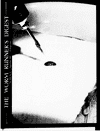
- James V. McConnell. Worms …
- James V. McConnell. A Tape Recorder Theory of Memory
- Frank R. Babich, Allan L. Jacobson, Suzanne Bubash, & Ann Jacobson. Behavior Modifications in Naive Rats Produced by Injections of Ribonucleic Acid Extracted from Trained Rats.
- H.H. Røigaard-Petersen, E. J. Fjerdingstad & Th. Nissen. Facilitation of Learning in Rats by Intracisternal Injection of Conditioned RNA.
- Carolyn Goren. Ribonucleic Acid: Influense on the Maze-Learning Ability of Rats.
- Stephanie Fantl & John A. Nevin. Classical Discrimination in Planarians.
- Edward J. Feldman & Patrick J. Capretta. Post-Conditioning Delay & Memory Transfer Through Cannibalism.
- Eric Austad. A Preliminary Attempt at Food-RewardConditioning in Planarians.
- Bernard M. Rabin & David R. Hertzler. Replications of Two Experiments on Reactive Inhibition in Paramecia
- Edward Cohen. Grafting Planarian Tissue.
- Donald A. Dewsbury. Electric Fishes & Their Potrntial as Subjects for Psychological Research.
- Compiled by Ursula Mosler. The Annotated Bibliography of Research on Planarians: Part VII.
- James V. McConnell. …And Things.
- Robert D. Tschirgi. A Singular Case of Extreme Electrolyte Balance Associated with Folie a Deux.
- Conrad Chyatte. On the Psychology of Ancient Sparta.
- Robert E. Taylor. A Replication of the Balso Snell Phenomenon.
- Fred Leavitt. The Disappearance of Geoffrey Sweetwater — A Reconstruction
- John H. Vincent. Mendel in Society.
- Hajas Lindin Kohrupkin. Grafsmanship.
- Jack Tomlinson. Reason for Research & an Anthology of Answers, or, Are These the Only Ways to Waste a Governmental Grant?
- John McClellan. Invitation to Sud Nim.
- Peter Driver. Haggis.
- Samuel Sass. A Small Thought — or Two.
- Letters to Editor.
Volume 8 Issue 1
Published Apr 1, 1966
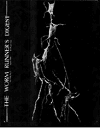
- James V. McConnell. Worms (and Things.)
- Allan L. Jacobson. Passion & Planarians: An Editorial.
- Jay Boyd Best & Errol Elshtain. Biophysics of Unconditioned Response Elicitation in Planarians by Electric Shock.
- Carl C. Lindegren. A Forecast of Holocaust.
- Ann Powers & B. G. Katzung. Effect of Temperature on Sensitization to Light in Planarians.
- Art Poskocil. If You’re a Paramecium, Can You Learn? A Query.
- Masaharu Kawakatsu. Mailing of Living Planarians.
- Wyn C. Wade. A New Answer to an Old Problem in Mental Health Research: The Sedation Effect of Two Current Psycho-Pharmalogical Drugs on Psychiatric-Ward Cockroaches.
- Compiled by Ursula Mosler. The Annotated Bibliography of Research on Planarians: Part VIII.
- James V. McConnell. (Worms) and Things.
- Selby Evans. Operant Conditioning in the Domestic Darning Needle (Spina ferrica.)
- J.A. Lindon. Mammalian Clerizoo A B C.
- Robert L. Dean. Dr. B. Wilder’s Catalogue of Vogue Words.
- Jerry Tobias. Commencement Address.
- Bobby, Brett, Seth, & Mom Jacobson. Experiment on Apparently Planaria.
- Rita Meredith. The Artificial Aunt.
- Gershom Clark Morningstar. Thoughts on a Modern Research Institute, III: Research Integrity.
- John McClellan. The Mice of Sud Nim.
- Peter R. Runkel. How to Teach a Cow a Damn Good Lesson.
- Edward L. Galligan. A Sensible Proposal for Ending the Dirty Books Racket.
- Robert Titiev. A Modern Love Scene.
- Martin Gardner. Manifesto of the Institute of General Electrics.
- Henry Winthrop. How to Make Use of the Self-Fulfiling Profecy Without Half Trying.
- Elizabeth Yount. A Child’s Garden of Vectors.
- James V. McConnell. All of You.
- Letters to Editor

